Learn How to Manage Fear with 200+ Practical Strategies
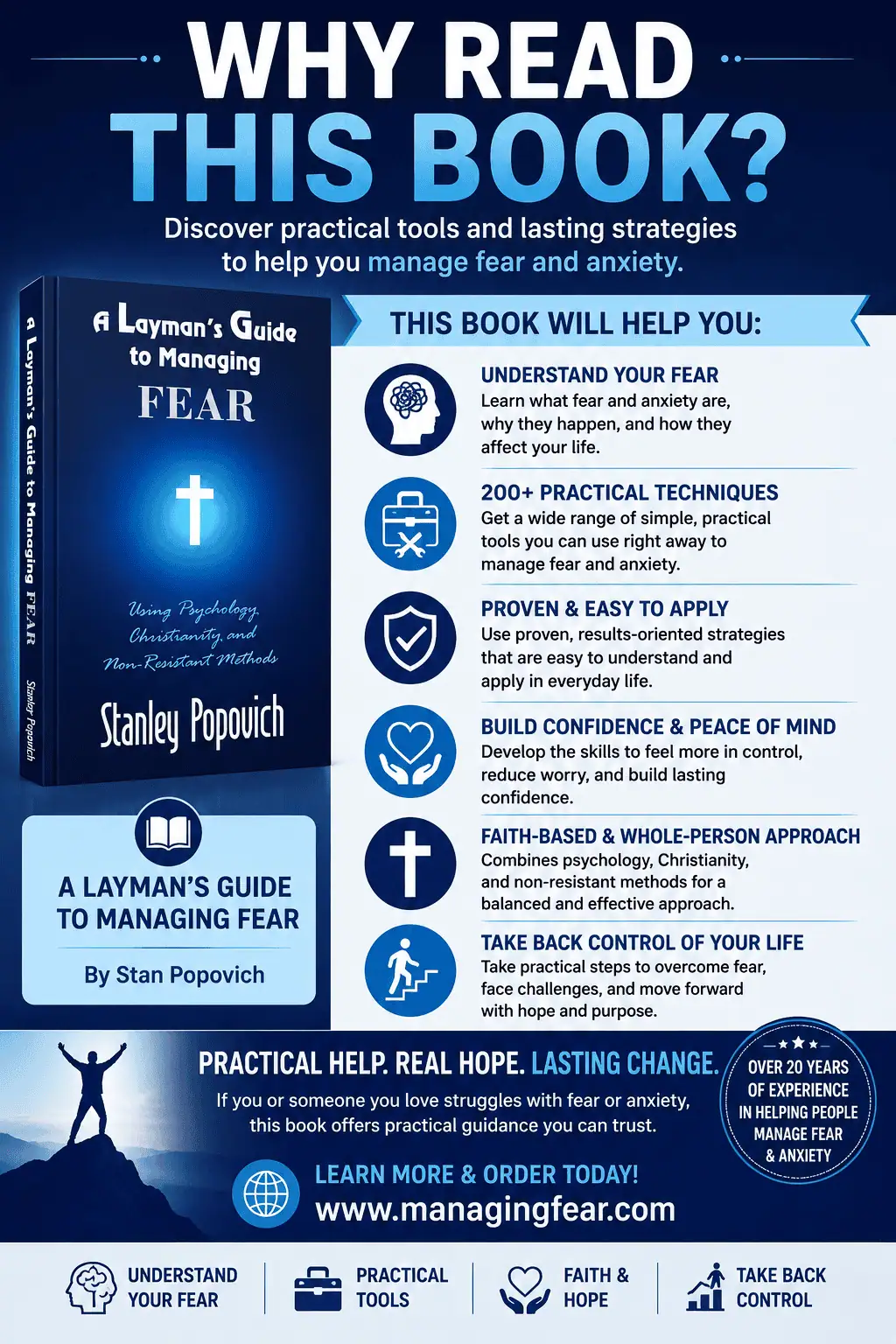
When fear keeps coming back, finding the right approach can be challenging. A Layman’s Guide to Managing Fear combines over 20 years of real-life experience with practical guidance informed by interviews with mental health professionals to help readers understand fear, explore different strategies, and develop healthier ways to respond.
The book brings together hundreds of practical techniques, including real-world methods and optional faith-aware guidance for readers who want that perspective. Instead of relying on a single approach, this guide provides a variety of tools you can explore to discover what works best for your situation and build confidence in handling fear, stress, and everyday challenges.
Frequently Asked Questions About A Layman’s Guide to Managing Fear
1. What is A Layman’s Guide to Managing Fear about?
A Layman’s Guide to Managing Fear is a practical self-help book that provides more than 200 strategies and techniques to help people better understand and manage fear in everyday life. The book explains that fear can take many forms and that different situations may require different approaches.
Rather than focusing on one single method, the book introduces readers to a variety of practical tools they can explore to better recognize fear, respond to challenging thoughts and emotions, and develop a more flexible approach to managing fear.
2. How does this book help people manage fear?
The book helps people manage fear by teaching practical strategies for understanding how fear affects thoughts, emotions, and actions. Readers learn different techniques they can use to respond more effectively when fear becomes overwhelming.
The goal is to help individuals build a personal toolkit of strategies, recognize patterns that contribute to fear, and discover approaches that work best for their own situations.
3. Why does this book include more than 200 fear-management strategies?
This book includes more than 200 fear-management strategies because fear does not affect everyone in the same way. A technique that helps one person may not be as effective for someone else or may not fit every situation.
By providing a wide range of approaches, the book allows readers to explore different tools and find strategies that best match their personal challenges. The purpose is not to use every technique, but to have more options available when fear appears.
4. What techniques are included in this book?
A Layman’s Guide to Managing Fear includes a variety of practical strategies and techniques drawn from different approaches to understanding and responding to fear and anxiety. These include cognitive behavioral strategies, acceptance-based techniques, exposure-based approaches, mindfulness practices, relaxation and breathing techniques, grounding strategies, and other coping methods.
Examples of strategies discussed include:
Identifying and challenging fearful thoughts
Learning acceptance and mindfulness skills
Practicing relaxation and breathing techniques
Using grounding strategies
Developing healthier responses to stress
Exploring gradual approaches to facing fears
Managing negative thought patterns
The book presents these ideas in a simple, easy-to-understand format for everyday readers.
5. Who can benefit from reading this book?
A Layman’s Guide to Managing Fear can benefit anyone who wants to better understand fear and learn practical strategies for responding to stressful situations.
The book may be helpful for people who:
Experience recurring fear or anxious thoughts
Want to develop additional coping strategies
Are looking for practical self-help tools
Want to better understand how fear affects their decisions and emotions
Are supporting someone who struggles with fear
The book is designed as an educational resource and can be used alongside professional guidance when appropriate.
6. How is this book different from other books about fear and anxiety?
Many books about fear and anxiety focus on one specific approach or technique. A Layman’s Guide to Managing Fear takes a broader approach by providing a variety of strategies that readers can explore.
The book’s main idea is that managing fear often requires flexibility. Different situations may call for different tools, and having multiple strategies available can help people discover what works best for them.
Instead of promoting one universal solution, the book gives readers a collection of practical options for developing their own approach to managing fear.
7. Is this book a replacement for counseling or therapy?
No. A Layman’s Guide to Managing Fear is not intended to replace professional counseling, therapy, or medical advice. It is an educational resource designed to provide practical strategies and information that can help readers better understand fear and explore different coping approaches.
Some people may find these strategies helpful as a supplement to professional guidance, while others may use them as general tools for personal growth and learning.
1. Click “Buy Now” to begin your secure transaction. 2. Choose your payment method via PayPal. 3. Download your e-book immediately after purchase. 4. Have questions? Contact Stan for assistance.
A Layman's Guide To Managing Fear
A Layman's Guide To Managing Fear
--
Don't close this window before completing payment!
Loading...
Loading...
Trusted by Experts and Readers
A Great Balance Of Techniques – There is never just one single approach to help us face our fears. It is accomplished by taking the steps that work best for us and mingling them together to find our perfect workable solution. This book gives us insight into many different approaches. – Gwen
I Use The Same Suggestions In My Practice – A Layman’s Guide to Managing Fear is a great self-help book. I have been a counselor for many years now and I use some of the same suggestions and tactics in my practice and you didn’t have to pay $55.00 an hour to hear them! – Mark Myers
This Book Is Worth Your Time – This book is easy to read and understand and is full of practical information. As a professional counselor in private practice, I see many clients struggling with anxiety issues. The information presented can be a good place to start to address these issues. – Desda
The Format Of The Book Is An Easy Read – This is a well-written guide that offers strategies to manage fear and anxiety. The format of the book makes for an easy read, and the case examples are helpful for the reader to understand how the strategies could be applied. – Annete
Great Information – I like this book because it is very compact in rich material. The author uses common sense, current research, as well as his own experience to provide the reader with lots of good tips to deal with anxiety. I highly recommend it! – Shane