How to Manage Fearful and Obsessive Thoughts
By: Stan Popovich
How Can You Manage Fearful and Intrusive Thoughts?
You can manage fearful and intrusive thoughts by changing how you respond to them rather than trying to eliminate them. Helpful strategies include recognizing thoughts as mental events, allowing uncomfortable feelings to pass, avoiding reassurance cycles, redirecting your attention, practicing coping skills, and seeking professional support when needed.
Many people struggle with sudden, intrusive thoughts, especially during stressful or uncertain times.
The goal isn’t to eliminate fear, but to respond differently. By understanding fear and letting thoughts be, you weaken the anxiety cycle.
Understanding Fearful and Intrusive Thoughts
Fearful thoughts are distressing ideas that pop into your mind and make you feel stressed out or upset. They often appear automatically, and it’s common to feel worried, ashamed, or overly critical when they show up.
Some thoughts are intrusive—unwanted, persistent, and hard to control. Sometimes these thoughts are connected to conditions like OCD, which can trigger physical or mental rituals. Recognizing this is the first step toward gaining control—it’s not a reflection of personal weakness.
Fearful thoughts affect both mind and body. You may feel tense, restless, or mentally drained, and notice symptoms like a racing heart, muscle tension, or shallow breathing. Over time, these thoughts can lead to avoidance or a persistent sense of unease. Knowing how they affect you is a key step toward managing them effectively.
How Can You Manage Intrusive Thoughts in the Moment?
It’s completely normal for intrusive thoughts to feel upsetting or repetitive. The good news is, with practice, you can learn to respond differently—and gradually reduce their intensity. Here are some strategies that many people find helpful:
1. Label the thought: The first thing a person should do is not dwell on the fear-provoking thought when it comes. The more a person tries to determine the fear behind the thought, the stronger it becomes. Label these thoughts as “intrusive thoughts” and allow the thoughts into your mind. Do not try to push them away, but rather just let the thoughts pass.
2. Visualize a red stop sign: Sometimes, you may encounter a fearful thought that feels hard to manage. When this happens, imagine a red stop sign as a gentle reminder to shift your focus to something else. Even if the thought feels scary, try not to dwell on it. This simple technique can help you manage anxiety and ease distressing thoughts.
3. Journal your thoughts: Journaling can help reduce intrusive thoughts. Writing them down lets you see them more clearly, gain perspective, and process emotions, which lowers stress.
4. Remember thoughts are exaggerated: Sometimes, a person may encounter a lot of scary thoughts coming at them all at once. Instead of getting upset, remember that your negative thinking is exaggerated with worry. Ignore the fear behind these obsessive thoughts, regardless of how strong the fear is.
5. Distract yourself: You can distract yourself from your intrusive thoughts. For instance, call a close friend, go to the gym, watch your favorite show, read a book, listen to music, or take a walk. Whether you change your location or engage in a new activity, distracting yourself can break up disturbing thought loops before they spiral out of control.
6. Carry a notebook of positive statements: You might find it helpful to jot down thoughts or personal values. This can serve as a calming practice to lift your depression and help you refocus your thoughts, alongside evidence-based OCD techniques.
7. Exercise regularly: Physical exercise is a great way to minimize unwanted thoughts. When you exercise, your brain releases serotonin, a feel-good chemical that is helpful in relieving stress. Any form of movement such as walking can help you keep intrusive thoughts at bay.
8. Identify the fear behind the thought: The difference between an obsessive thought and a regular one is that an obsessive thought is based on fear. Find the source of the fear behind your negative thinking and find ways to take away the fear.
9. Redirect: Redirecting means intentionally shifting your attention away from an obsession or urge to perform a compulsion, while allowing any discomfort or uncertainty to remain in the background. It is most effective when used as part of resisting the OCD cycle itself, rather than as a way to eliminate or “fix” the intrusive thought.
The process begins by noticing and labeling the OCD thought or urge, such as “This is an OCD thought” or “This is the urge to check or figure this out.” This helps create distance between you and the obsession. Next, you allow the uncertainty or anxiety to be present without trying to resolve it, using statements like “I don’t need to solve this right now” or “It’s okay to feel uncomfortable.” The key step is to avoid engaging in compulsions such as checking, analyzing, mental reviewing, or seeking reassurance, since even small responses can keep the OCD cycle going.
After that, you gently redirect your attention to something else without forcing it. This might involve returning to a task, engaging in physical activity, focusing on responsibilities, or noticing your surroundings. The message is essentially, “I’m not solving this—I’m continuing with my life.” It’s also important to expect that the OCD thought will likely return. When it does, you simply repeat the same process without adding new analysis or trying to “figure it out” in a different way.
10. Seek professional help: Take advantage of the help that is available. If possible, talk to a professional who can help you manage your fears and anxieties. They will be able to provide you with additional advice and insights into how to deal with your intrusive and fearful thoughts.
What Is OCD?
Obsessive-compulsive disorder (OCD) is characterized by uncontrollable, recurring thoughts known as obsessions. These obsessions lead you to do repetitive behaviors, also called compulsions. These obsessions and compulsions get in the way of daily activities and cause a lot of distress.
OCD occurs when your brain gets “stuck” on thoughts, worries, or fears, making them feel larger than they really are. People with OCD often recognize their fears are unreasonable, yet they feel unable to stop worrying. The thinking part of your brain knows the reality, but the emotional part—the part that governs anxiety—can overreact.
OCD can cause panic, anxiety, and distorted thinking. The condition often narrows a person’s thinking and leads to fearful thoughts and assumptions about situations. People with OCD frequently respond to these thoughts through unhealthy coping behaviors known as rituals. A ritual is a physical action performed in an attempt to reduce or eliminate the distress caused by an intrusive thought. In addition, some people engage in mental rituals, which are mental responses used to manage the thought, such as trying to predict the future, repeatedly analyzing a situation, or obsessing over possible outcomes.
OCD focuses on the hyper-activity part of the brain that says what is dangerous. A person’s brain has too much activity and is over reactive. Their brain says there is an exaggerated danger. The cycle of OCD is the trigger which leads to anxiety/discomfort which leads to the compulsion, and this leads to temporary relief. The cycle then repeats itself again. OCD is telling you if you don’t do the compulsion something bad will happen.
What Is Purely Obsessional OCD?
Purely Obsessional OCD (“Pure O”) is a form of obsessive-compulsive disorder in which the compulsions are primarily internal rather than visible. Compulsions are still present—they simply take place in the mind instead of through obvious behaviors.
Instead of performing outward behaviors, individuals may engage in internal rituals. Mental compulsions in OCD include repeatedly checking or reviewing past actions, seeking reassurance in your mind, overanalyzing thoughts, trying to cancel or undo them, seeking certainty about safety, mentally checking feelings or intentions, and constant “what-if” worrying.
Regardless, the OCD cycle remains the same. An intrusive thought appears → anxiety spikes → a mental ritual temporarily reduces distress → doubt returns, often stronger than before.
With OCD, many people experience a strong need for absolute certainty and reassurance about things like intent, identity, relationships, or safety. Because 100% certainty is impossible, the mind keeps searching through repeated checking, analysis, and reassurance, and the ongoing struggle with the thought which keeps the cycle alive.
What Are OCD Compulsions?
Physical rituals/compulsions: Repetitive physical behaviors or mental acts performed to reduce distress, gain control, or prevent a feared event caused by obsessive thoughts. Common rituals include excessive cleaning, checking, counting, ordering, and mental reviewing, which often consume significant time and interfere with daily life.
Mental rituals/compulsions: Repetitive, hidden mental acts performed by individuals with OCD to reduce anxiety or neutralize intrusive thoughts. Unlike physical rituals, these are internal. They are intentional, self-reinforcing behaviors that temporarily reduce distress but ultimately perpetuate the cycle of obsessions. A mental compulsion and a mental ritual are generally the same thing. Both refer to hidden, repetitive mental acts performed to neutralize anxiety from obsessive thoughts. They are invisible versions of physical compulsive rituals.
Examples: Overanalyzing, predicting the future, and obsessing over a situation; having a specific thought that says something negative to you; trying to reason with intrusive thoughts; engaging in self-reassurance; checking how certain things or thoughts make you feel; mentally reviewing past experiences to feel completely certain; and attempting thought suppression, or trying not to think about something.
How Cognitive Behavioral Therapy Helps with OCD
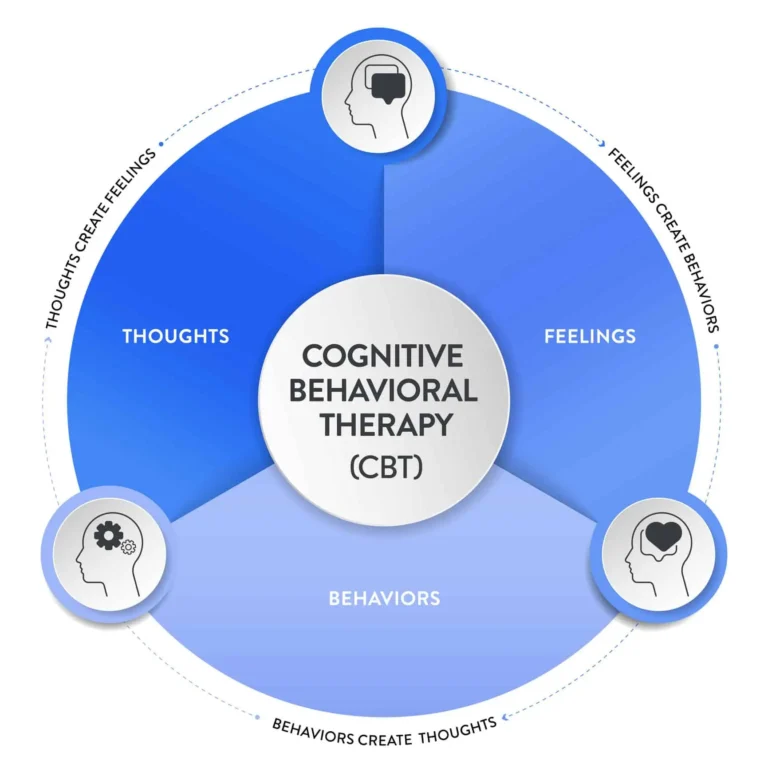
Cognitive Behavioral Therapy (CBT) helps people identify and change the thought patterns and behaviors that keep anxiety and compulsions going. Instead of accepting fearful thoughts as facts, clients learn to spot unhelpful thinking patterns—like catastrophizing, overestimating danger, or intolerance of uncertainty—that make anxiety worse.
For anxiety, CBT supports individuals in challenging exaggerated or distorted predictions, gradually facing feared situations through structured exposure, reducing avoidance and safety behaviors, and building confidence through repeated practice. In addition to these strategies, CBT teaches practical coping skills—such as relaxation techniques, mindfulness, and structured problem-solving—that help people manage anxiety effectively in the moment.
When an OCD Thought Comes
- Label it as an OCD thought.
- Don’t push the fear and thought away.
- Acknowledge what OCD is making you think and feel.
- Make a place for the OCD thought. Learn how to work with it.
- Manage your physical and mental reactions.
- Ride the thought out. The fear won’t last and will eventually go away.
- Distract yourself and focus on something else.
- Focus on what is around you.
- Take deep breaths so you do not get overwhelmed with fear and what-ifs.
- Slow your mind.
- Watch how you react to the thought and learn not to overreact.
- Do not jump to conclusions and predict what might happen.
- Use other senses to ground yourself at the moment.
- Learn to adapt. Find ways to adapt to your current fear.
- Try to avoid black and white thinking.
- Acknowledge your panic situation and find ways to de-escalate.
- Do not predict the future. It just prolongs the suffering.
- Remember that you can’t predict the future with 100% certainty.
- It is not necessarily the truth.
- OCD makes assumptions into facts.
- Instead of having tunnel vision, look at the bigger picture.
- There are multiple results to the same situation.
How to Manage OCD
- Recognize what OCD is telling you.
- OCD is trying to convince you there is a threat when there is no threat. It’s a perceived threat.
- OCD makes assumptions into facts. Do not jump to conclusions and do not predict what may happen.
- Start breathing when you panic. Breathing will decrease your anxiety, which will help you to start thinking better.
- Do not predict the future. You can’t predict the future with 100% accuracy.
- Do not listen to your OCD. Your OCD exaggerates reality.
- Do not take your OCD thought seriously. It’s a thought and thoughts come and go.
- Do not push the OCD thought away. It will only make it worse.
- Acknowledge your current panic situation and find ways to reduce your anxiety.
- Assess the validity of these thoughts by examining supporting and contradicting evidence.
- Notice your intrusive thoughts and let the thoughts pass.
- Shift your attention to activities, thoughts, or interactions that help you reconnect with the present moment.
Coping Statements for Negative Thoughts
- This feeling isn’t pleasant, but it will not last.
- I can be anxious and still deal with this situation.
- This isn’t an emergency. It’s okay to think about what I need to do.
- I will take deep breaths to decrease my anxiety.
- This is an opportunity for me to learn to cope with my fears.
- I can take a small step forward.
- I’ve survived this before and I’ll survive this time too.
- I can do my coping strategies and allow this to pass.
- These are just thoughts, not reality. I can think differently.
- I do not need to rush. I can take things slowly.
- My thoughts are not necessarily true or factual.
- This is difficult and uncomfortable, but it’s temporary.
- I can learn from this, and it will be easier next time.
Maladaptive and Adaptive Planning
Adaptive and maladaptive planning are two distinct ways individuals manage stress, challenges, and environmental demands. Adaptive planning consists of active, proactive strategies that resolve issues and promote growth, while maladaptive planning relies on avoidance or temporary, unsustainable solutions that often exacerbate problems over time.
Adaptive planning is a coping strategy where you anticipate potential challenges and create flexible, realistic steps to manage them effectively. It involves thinking ahead in a constructive way—preparing for possible obstacles while remaining open to adjusting your approach as situations change. The focus is not just on making a plan, but on making one that is practical and adaptable in the face of uncertainty.
For example, instead of getting stuck in worry like “What if I fail my presentation?”, adaptive planning involves preparing specific steps such as outlining key points, practicing a few times, and anticipating common questions. It may also include strategies for managing anxiety in the moment, such as pausing and using a breathing technique. This approach differs from overthinking or rumination because it leads to action and reduces stress rather than keeping a person trapped in repetitive worry.
Maladaptive planning refers to a coping style where a person engages in what feels like planning, but the process actually leads to increased anxiety, avoidance, or ineffective action rather than real problem-solving. It commonly involves overthinking, catastrophizing, or developing rigid and unrealistic plans that are difficult or impossible to carry out. Instead of reducing stress, it tends to maintain or intensify it because the individual spends more time mentally preparing than taking meaningful steps in the real world.
A key feature of maladaptive planning is that it can resemble problem-solving on the surface but functions more like rumination. For example, someone might repeatedly imagine worst-case outcomes for a presentation—such as failing completely and being judged harshly—without actually preparing or practicing. Unlike adaptive planning, which is flexible and action-oriented, maladaptive planning is fear-driven, rigid, and ultimately unhelpful in managing stress effectively.
How Exposure and Response Prevention Helps with OCD
The most effective first-line therapy for OCD and related anxiety disorders is Exposure and Response Prevention (ERP), a specialized form of Cognitive Behavioral Therapy. ERP involves gradually facing feared situations or thoughts (exposure) while resisting compulsive behaviors (response prevention), retraining the brain to tolerate anxiety and reduce fear over time. For OCD, Exposure and Response Prevention focuses on retraining the brain’s fear system rather than trying to eliminate fear altogether. Instead of avoiding anxious thoughts or attempting to neutralize discomfort, individuals learn to change their response to it.
Treatment emphasizes allowing anxiety to be present, resisting compulsions and safety behaviors, and staying in feared situations long enough for distress to naturally rise and fall. This process teaches the brain an essential lesson: fear is uncomfortable, but it is not dangerous. Through repeated practice, the brain learns that anxiety naturally rises and falls without causing harm, which gradually reduces the urge to perform compulsions.
How ERP Works Against OCD
OCD runs on a fear–relief loop, where an obsession (an intrusive thought, image, or urge) triggers anxiety. To reduce the discomfort, a person engages in a compulsion, like washing, checking, or seeking reassurance, which provides temporary relief. Over time, this reinforces the cycle, teaching the brain that “compulsions keep me safe,” and making OCD thoughts and behaviors more persistent which reinforces the cycle.
ERP breaks the OCD loop by targeting the two processes that keep it alive: obsessions and compulsions. The exposure component involves intentionally facing feared thoughts, sensations, or situations—such as allowing disturbing thoughts, touching feared objects, or entering situations you typically avoid. This activates the obsession without escaping from it, giving the brain a chance to learn something new.
The response prevention part of ERP is where real change happens. Instead of performing rituals, seeking reassurance, or avoiding feared situations, you allow anxiety to be present without trying to fix it. By skipping the compulsion, the cycle is interrupted, and the brain begins to learn new rules: anxiety is uncomfortable but not dangerous, uncertainty can be tolerated, and thoughts are not threats. Over time, fear naturally fades without the need for rituals.
At first, anxiety may spike and urges to ritualize can feel intense. That’s completely normal. With repeated practice, these urges weaken, anxiety naturally decreases, and obsessions feel less important. Nothing has to be done to “fix” the fear for progress to occur. Eventually, the brain learns, “I can have this thought and still be okay.” When compulsions stop, obsessions occur less often, feel less urgent, and no longer control behavior.
ERP is highly effective because OCD thrives on the need for certainty and control. By preventing compulsions, behaviors that once provided temporary relief are no longer reinforced, allowing the brain to relearn that feared situations are safe and that anxiety can rise and fall on its own. In simple terms, ERP teaches that anxiety and uncertainty are not threats and that compulsions are unnecessary.
Four Elements of ERP
1. The trigger: Exposures are planned therapeutic experiences, during which you purposely expose yourself to a feared situation (the trigger) that causes you to experience uncomfortable thoughts and emotions.
2. Prevention: While you are in your feared situation, you need to resist the urge to engage in the rituals and avoidance that you usually would do.
3. Habituation: Habituation in OCD is the natural reduction of anxiety, fear, or distress that occurs through repeated, prolonged exposure to triggers without engaging in compulsive behaviors. It allows the brain to learn that feared situations are not dangerous, eventually decreasing emotional responses to them. Through repeated exposure to your feared situations, you gradually get used to them, and your brain re-learns that you can handle whatever it is you have been avoiding. The goal of habituation is to resist the compulsions and rituals.
Habituation is kind of like jumping into a pool of really cold water. The pool of cold water is you experiencing the anxiety and fear of your situation. OCD says to get out of the pool and do the compulsion or ritual. Habituation says do the opposite. Habituation says to stay in the pool because you will eventually get used to the cold water. It might take awhile, but if you stay in the pool long enough you will eventually get used to the cold water and it won’t feel as bad. The cold water starts to feel warm after a while.
This applies to how you deal with your OCD thoughts. OCD says you won’t make it. OCD says to get out of the pool and do the compulsions and rituals. Instead, you should stay in the pool and not do the compulsions and rituals and get used to the anxiety that you are experiencing. (Just like when you get used to the cold water). The goal is to experience the anxiety and not get rid of it. Eventually you will develop a tolerance to the anxiety and fear. Anxiety will eventually subside.
4. SUDS: This is a 0–100 self-report tool used in ERP. Sample ratings are from zero which is no anxiety to 100 which is the highest anxiety possible. It helps to measure, track, and manage anxiety levels during exposure exercises. It measures the “heat” of anxiety at a specific moment.
The OCD Bell Curve: How Anxiety Rises and Falls
When you face triggers without doing your usual compulsions, your anxiety doesn’t stay the same—it goes up and down in a pattern called the OCD Bell Curve.
You start at the bottom with the trigger. The first part of the curve is the anxiety spike. As soon as you face a feared thought, image, or situation anxiety jumps up quickly. This is the peak of the curve. It can feel intense or overwhelming—but it doesn’t last forever. The bell curve eventually goes down which means the panic doesn’t last and the anxiety goes down. Eventually the curve goes to the bottom which is the relief. This is the downward slope, showing that your brain is learning that nothing dangerous happens even when you feel anxious.
Over time, repeated exposure leads to habituation. This means your brain gets used to the anxiety. Each time you experience the spike and notice it fade, anxiety becomes easier to handle. The curve flattens: peaks are lower, and anxiety drops faster.
By repeatedly facing triggers without performing compulsions, your brain learns that anxiety is uncomfortable but not dangerous. Over time, anxiety spikes become less intense and fade faster, and your nervous system builds tolerance to uncertainty. This doesn’t mean anxiety disappears completely, but it loses power and frequency, and you can manage it without needing rituals.
How This Fits the Managing Fear Framework
Many people try to manage fear by searching for a single solution, but fear can appear in different situations and may require different approaches. The Managing Fear Framework combines multiple strategies and techniques to help individuals explore different tools, discover what works best for their situation, and develop a more flexible way to respond to fear.
A Layman’s Guide to Managing Fear expands on this framework by providing practical strategies and tools to help readers understand fear, develop coping skills, and build confidence in handling challenging situations.
Whether you experience occasional fears or recurring anxiety, having a variety of approaches available can help you feel more prepared and better equipped when fear returns.